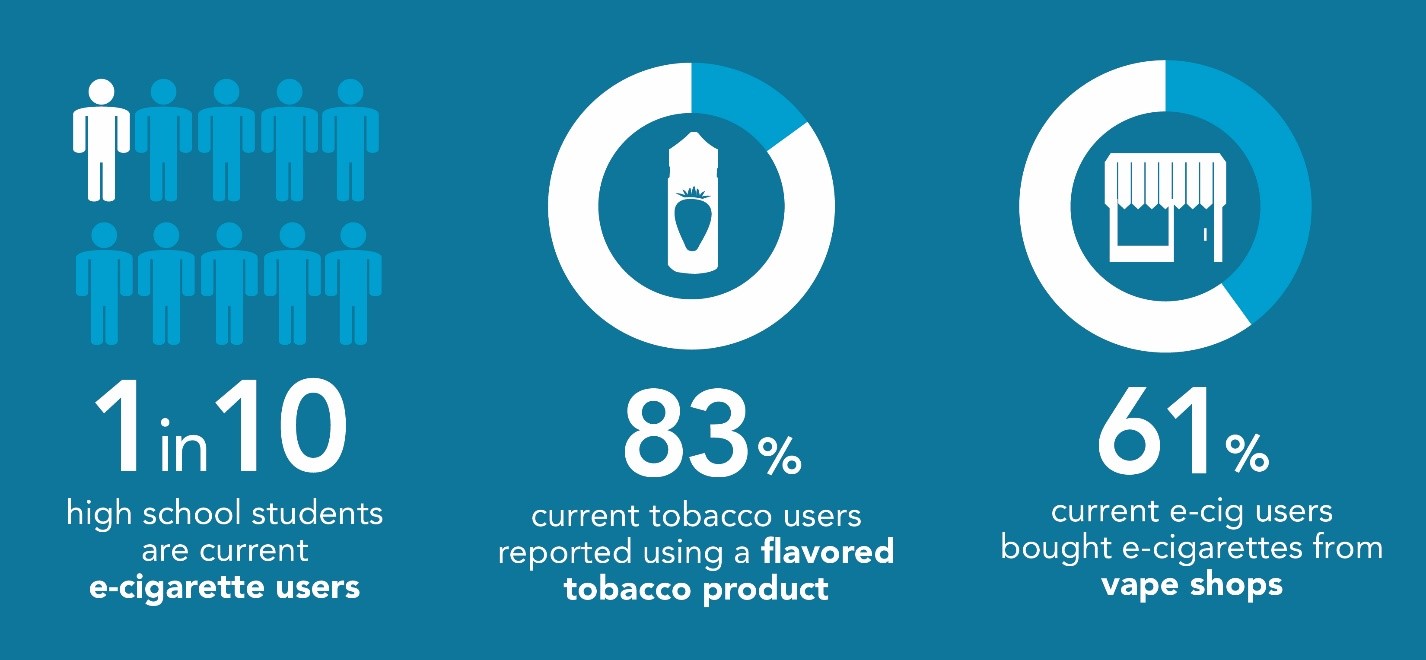
What can be done?
Raising awareness of the severity of the problem of vaping as well as the harmful effects vaping can produce are key to preventing even more teens from becoming addicted to nicotine, as well as beginning to end current adolescent addictions.
84% of teenagers report obtaining important health information from the internet, so resources that are online, free-of-cost and easily adaptable, such as this website, are crucial for providing teens with the truth on the harmful effects of nicotine.
Why is vaping bad for a developing adolescent?
Studies, such as some discussed by Yale Medicine, have shown that addiction to nicotine and usage of vaping can lead to problems with focus, memory, and learning, and can lead to depression, lethargy, headaches, irritability, and sleeplessness. While vape and e-cigarette products do not contain around 7000 chemicals that are produced with regular cigarette use, the full extent of information on the chemicals within e-cigarettes and their effects is still relatively uncertain, as e-cigarettes are still relatively new. While many long-term effects of addiction to vaping are unknown, there is evidence however that some of the chemicals within e-cigarettes can be linked to cancer, and e-cigarettes have not been approved by the Food and Drug Administration as smoking cessation devices.
According to the CDC, around 69% of middle and high school students are exposed to vaping advertisements in a variety of places. Of the ads studied and discussed by the CDC, 68% of the ads used happiness, 41% used friendship, 24% used sex, and 24% used success to sell their products. 87% of ads tried to appeal to customers by discussing the benefits of e-cigarettes over tobacco cigarettes, while 40% of video ads mentioned health in some way, shape or form. Using tactics like emotional appeal on social platforms are all highly effective at appealing to youth. According to the Truth Initiative, 43% of young people who had never used e-cigarettes ended up trying nicotine because of appealing flavors such as fruits, candy, desserts, and other sweets.
Addiction Prevention Condition
How Can I Prevent Myself from Developing an Addiction to Nicotine?
Information originated from KidsHealth®
Know what’s right. Trust your own feelings about what’s right and wrong. Ask yourself, “Is it the right thing to do?” You probably already know the answer. When you know the right thing to do, it helps you stand firm.
Have a friend who will stand with you. It can really help to have at least one other peer who is willing to say "No," too. This takes a lot of the power out of peer pressure. It's great to have friends who will back you up when you don't want to do something.
Choose good friends. You've probably had a parent or teacher say, "Choose your friends wisely." Peer pressure is a big reason why they say this. If you choose friends who don't use drugs, don’t cut class, don’t smoke cigarettes, and don't lie to their parents, then you probably won't do these things either, even if other kids do.
Help a friend. Maybe you notice that a friend is having trouble saying no to peer pressure. You can help by saying, "I'm with you — let's go."
Walk away. If you're faced with peer pressure while you're alone, there are still things you can do. You can stay away from peers who pressure you to do stuff you know is wrong. You can tell them, "Nah" and walk away. Better yet, find other friends and classmates to hang around with.
Get advice from an adult. If you face peer pressure that’s hard to handle, get advice from an adult you trust. Talk to parent, teacher or school counselor. It can help you feel much better. Plus, they can help you prepare for the next time you face peer pressure.
How Can I Quit?
Decide why you want to quit and write it down or put it in your phone. Look at the reason(s) when you feel the urge to vape.
Pick a day to stop vaping. Put it on the calendar and tell supportive friends and family that you're quitting on that day.
Get rid of all vaping supplies and products.
Download tools (such as apps and texting programs) to your phone that can help with cravings and give encouragement while you try to stop vaping.
Understand withdrawal. Nicotine addiction leads to very strong cravings for nicotine. It can also lead to headaches, feeling tired, cranky, angry, or depressed, trouble concentrating, trouble sleeping, hunger, and restlessness.
The signs of withdrawal are strongest in the first few days after stopping. They get better over the following days and weeks. Get ready for feelings, people, and places that make you want to vape. If possible, avoid places and people that trigger the urge to vape.
If you feel the urge to vape, try these things instead: Chew sugar-free gum or drink water. Text, call, or hang out with a friend who will support you. Listen to your favorite playlist. Go for a walk or jog. Try yoga or meditation. Take 10 deep breaths. Keep your hands busy with a hobby, like drawing or making jewelry. Go somewhere where smoking/vaping isn't allowed.
When Should I Call the Doctor?
Call your doctor right away if you vape and have coughing, shortness of breath, or chest pain, nausea, vomiting, or diarrhea, tiredness, fever, or weight loss.

 Los Angeles County Public Health